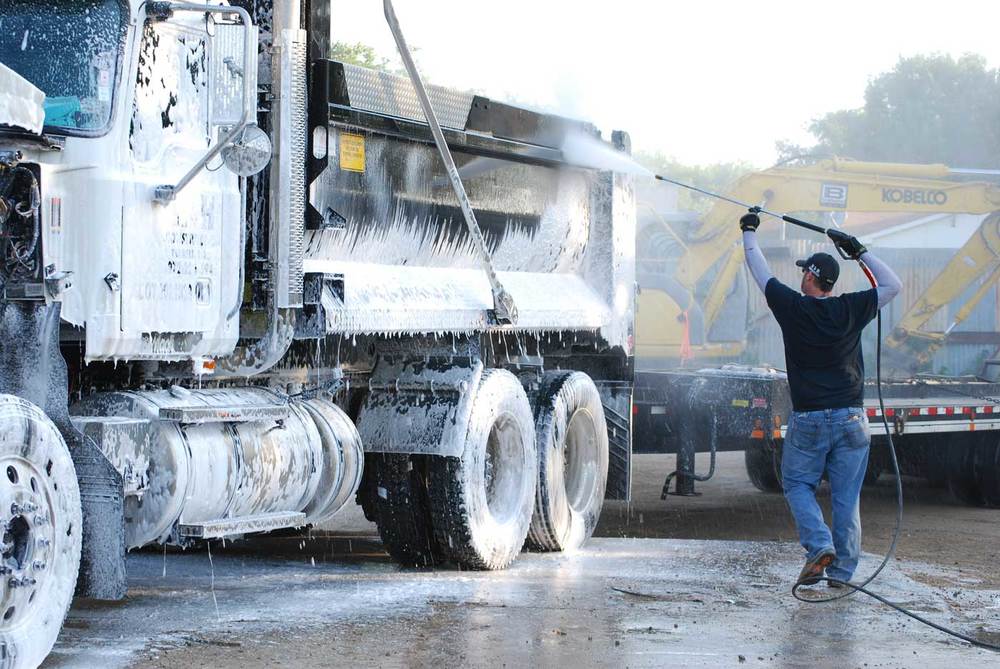
The right cleaner starts with three questions: What are you removing? What surface are you cleaning? How will you apply the product?
Use those answers to narrow your choices before comparing price. A product that works on one job may damage a different surface or be unsuitable for your machine.
1. Identify the soil and surface
Write down the main problem, such as oil, grease, road film or mineral buildup. Then identify the surface, including any paint, coating or finish.
Check product instructions for both. If the material is unknown, ask the surface or equipment supplier before testing a chemical.
2. Check the cleaning equipment
Confirm that the detergent is suitable for your pressure washer, floor scrubber or other cleaning system. Review the equipment manual and product directions together.
Ask about the application method, operating temperature and dilution. Do not put a chemical through a pump or injector unless the manufacturer permits it.
3. Read the label and safety data sheet
The label explains how to use the product. The safety data sheet, or SDS, describes hazards and protective measures.
Before use, confirm handling, storage, protective equipment and spill procedures. Train staff to understand this information. Never mix different cleaning chemicals together.
4. Test under normal working conditions
Follow the product’s test instructions in a small approved area. Use the specified dilution, application method and contact time.
Check the result after rinsing and drying, where required. Look for remaining soil, residue or damage. Record what worked so the team can repeat the process.
5. Compare cost per job
Container price tells only part of the story. Compare the amount of concentrate used, time spent cleaning and need for repeat work.
For example, if a job uses one quart of concentrate from a $40 gallon, the chemical cost is $10. Add labor, water and other relevant costs when comparing the full job.
6. Check site requirements
Confirm the requirements for your facility and process, including rinse steps and wastewater handling. For food-contact or disinfection work, use products labeled for the intended application and follow their directions.
Ask for evidence behind environmental and performance claims. A marketing label does not replace instructions for use.
Get help matching a detergent to the job
High PSI offers industrial detergents and cleaning chemicals. Bring details about the soil, surface, equipment and current cleaning process.
If you need to compare products, ask about detergent evaluation.
Contact High PSI for help choosing a product for your application.
Common questions
Can I use one detergent for every job?
Check each application separately. Soil, surface and equipment requirements can differ, even within the same facility.
Is a stronger dilution better?
Use the dilution in the product directions. If results are poor, review the full cleaning process before changing the concentration.
What should I bring when asking for a recommendation?
Bring the equipment model, surface details, photos of the soil and the label of your current cleaner. Include your dilution and application method.
Further reading: OSHA guidance on cleaning chemicals.